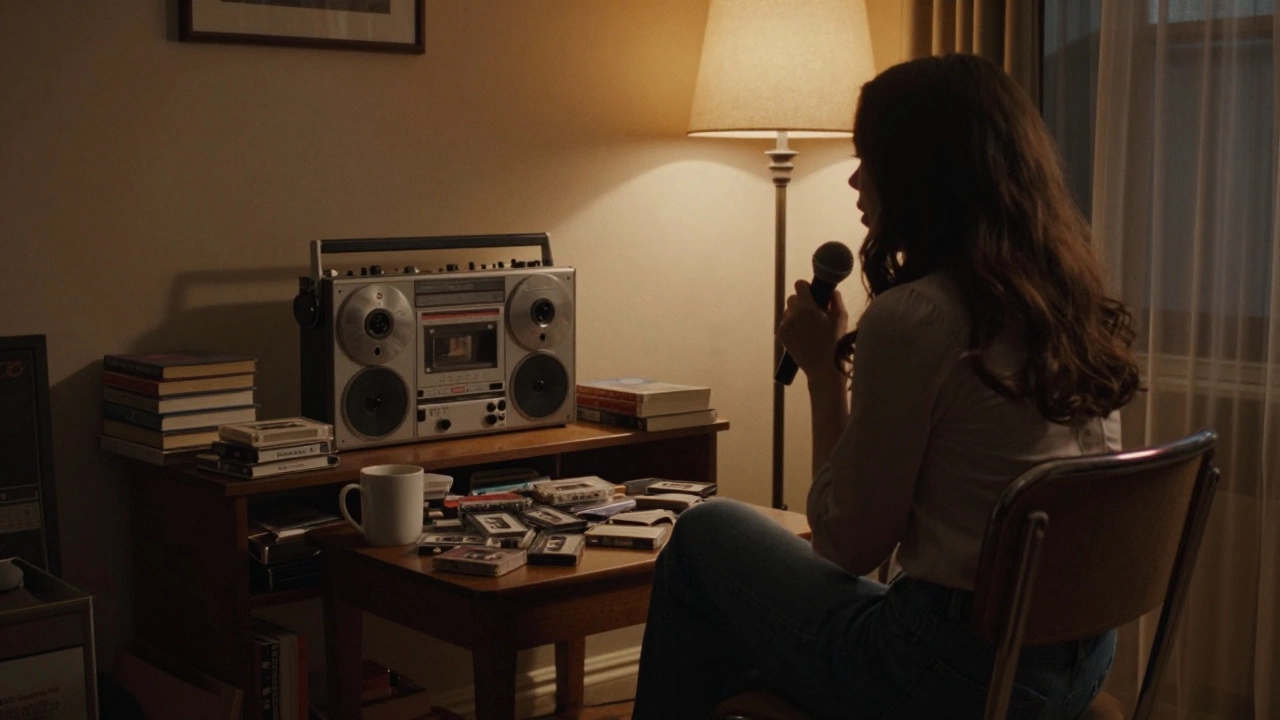
When Kristen DiAngelo first started filming interviews with women who worked as independent escorts in the 1970s and 80s, she didn’t set out to make a documentary. She was just trying to understand why so many of them were disappearing from public view-how their stories got buried under stigma, silence, and bad journalism. What began as a handful of cassette recordings in her Brooklyn apartment turned into a 12-year project that became An Interview with American Courtesans, a raw, unfiltered oral history that still resonates today. The film doesn’t glamorize. It doesn’t condemn. It simply lets the women speak.
There’s a quiet power in hearing someone describe their life without filters. One woman, who worked the streets near Times Square, talked about how she learned to read body language before she learned algebra. Another, who ran her own agency out of a Brooklyn brownstone, said she paid her taxes every quarter-just like any small business owner. These aren’t the stereotypes you see in tabloids. They’re real people with complex lives. If you’ve ever wondered what life is really like for women navigating the margins of sex work in America, you’ll find answers here. For context, some of these women moved between cities, including escort girls in east london, where similar patterns of independence and invisibility played out across the Atlantic.
Why This Project Started in a Living Room
Kristen didn’t come from journalism. She was a theater student at NYU, working part-time at a diner when she met a woman named Lila who came in every Tuesday for coffee and a slice of apple pie. Lila never talked about her job, but she talked about books, politics, and her daughter in college. One day, Kristen asked if she’d ever been interviewed. Lila laughed and said, "No one’s ever asked me what I think. They just want to know who I slept with."
That moment stuck with Kristen. She borrowed a tape recorder from a friend and asked if Lila would talk for an hour. The recording lasted three. Over the next year, Kristen recorded 17 women-some through word of mouth, others through flyers posted in libraries and community centers. She never paid anyone. She never took photos. She only asked: "Tell me about your day."
What the Women Didn’t Say
The most surprising thing about the interviews wasn’t what was said-it was what wasn’t. None of the women mentioned violence. Not once. Not even when Kristen gently pressed. They didn’t talk about pimps, drugs, or coercion. Instead, they talked about rent, childcare, dental bills, and the guy who always left a tip in quarters.
One woman, who called herself "Maggie" and worked in Chicago, said she turned down a job offer from a "high-end" agency because they wanted her to wear a uniform. "I don’t work for them," she said. "I work for myself."
This isn’t to say danger wasn’t real. But for these women, survival wasn’t about escaping exploitation-it was about controlling the terms of their labor. They kept ledgers. They screened clients. They used code words. They knew which hotels had working locks and which cabs wouldn’t take them home after midnight.
The London Connection
It’s easy to assume that what happened in New York was unique. But similar stories emerged from London, Paris, and Berlin. In the late 70s, a group of women in Soho began meeting in back rooms of pubs to share tips on avoiding police raids. They didn’t call themselves activists. They called themselves "girls who work late." Some of them traveled between cities, following seasonal demand. A few even moved to London for a few months, working as london girls escort during the summer festival season before returning to the States.
Kristen never traveled to the UK for the project, but she received letters from women there. One wrote: "We don’t have the same laws, but we have the same silence."
Why the Film Was Never Shown in Theaters
After finishing the final edit in 2008, Kristen sent the film to several festivals. Every one declined. Some said it was "too niche." Others said it was "too real." One programmer told her, "We can’t show this. People won’t know how to feel about it."
So she screened it herself. In community centers. In university lecture halls. In a basement in Philadelphia with 14 chairs and a projector borrowed from a local film school. People came. They cried. They stayed after to share their own stories. A former escort from Ohio told Kristen, "I thought I was the only one who felt this way."
By 2015, the film had been viewed over 80,000 times on private YouTube channels. No official release. No streaming platform. Just word of mouth.
The Legacy
Kristen stopped making films after 2016. She moved to upstate New York and now teaches writing to incarcerated women. She says the project changed her-not because she learned about sex work, but because she learned how deeply society fears women who control their own bodies and income.
"We’re taught that if a woman sells sex, she’s broken," she told me in a recent email. "But what if she’s just good at math? What if she’s good at reading people? What if she’s just trying to keep her kid in shoes?"
Today, An Interview with American Courtesans is archived at the New York Public Library and used in sociology courses at Columbia and NYU. It’s never been sold. It’s never been licensed. But it’s still being passed around-in USB drives, in encrypted files, in handwritten notes left in library books.
What’s Missing From the Conversation
Most debates about sex work focus on legality. Should it be banned? Should it be regulated? Should it be criminalized?
But the women in Kristen’s film never asked those questions. They asked: "Can I pay my bills? Can I get my kid to school? Can I sleep without fear?"
That’s the gap. We talk about policy. They talk about survival. We talk about morality. They talk about rent. We talk about trafficking. They talk about the client who brought them soup when they were sick.
There’s a reason why independent escort girls london still exist today-not because of demand for fantasy, but because of the lack of alternatives for women without safety nets. The system doesn’t protect them. It just makes them harder to see.
When Kristen started this project, she thought she was documenting a disappearing subculture. Now, she says, it’s only growing. More women are working alone. More are using apps. More are refusing to be labeled. And still, no one asks them what they want.
Maybe that’s the real story.